
Strait of Hormuz
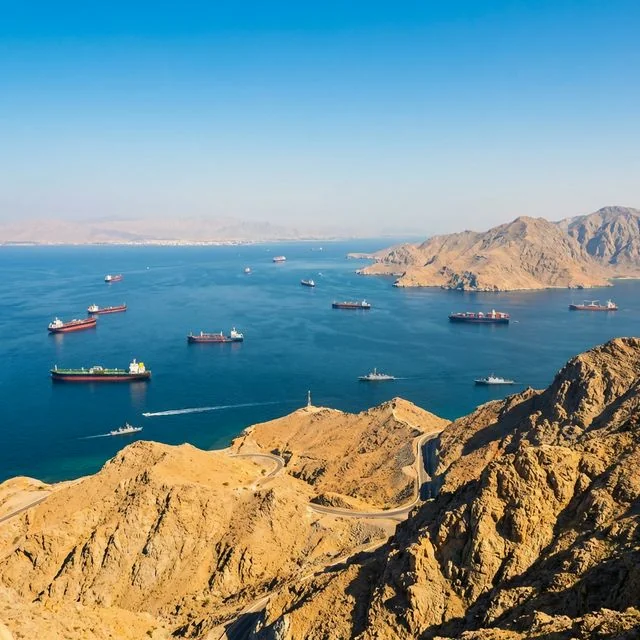
The Strait of Hormuz (مضيق هرمز) is one of the world's most important waterways, separating the Arabian Peninsula from Iran. Musandam's dramatic coastline forms the southern shore of this narrow strait — and from Khasab, you can see across to Iran on a clear day.
Strait of Hormuz at a Glance
Width
39 km at narrowest
Oil Traffic
~21 million barrels/day
Borders
Oman, Iran, UAE
Depth
Up to 100m
Visibility
Iran visible from Khasab
Marine Life
Dolphins, whales, turtles
History & Significance
The Strait of Hormuz has been one of the world's most important maritime passages for thousands of years. Ancient Persian, Arab, and Portuguese traders all sailed these waters, and the ruins of forts along the Musandam coast tell the story of centuries of strategic competition.
Today, approximately 21 million barrels of oil pass through the strait daily, making it the world's most important oil chokepoint. From Khasab, you can watch enormous tankers and container ships navigating the narrow passage — a dramatic reminder of the global significance of this waterway.
For visitors, the strait provides spectacular sunsets — watching the sun dip below the Iranian mountains across the water is a memorable experience, especially from a dhow sailing in the nearby fjords.
Frequently Asked Questions
Can I see the Strait of Hormuz from Musandam?
Is it safe to visit Musandam near the strait?
Can I see oil tankers from Khasab?
Why is the Strait of Hormuz important?
Explore the Waters of Musandam
Cruise through the dramatic waters near the Strait of Hormuz on our traditional dhow tours.