Khasab Dolphin Watching: The Ultimate Guide
Discover everything about Khasab dolphin watching tours. Learn the best times, prices, boat types, and what to expect in the Oman fjords.

Jazar Musandam Team
If you are planning a trip to the Musandam Peninsula, experiencing a Khasab dolphin watching tour is absolutely non-negotiable. Known as the "Norway of Arabia" due to its spectacular, rugged limestone fjords dropping straight into the sea, Khasab is not just about the scenery—it’s home to some of the most playful and abundant marine life in the Middle East.
While there are many places in the world to see dolphins, Khasab offers a uniquely intimate and culturally rich experience. Instead of crowded, commercialized whale-watching vessels, you experience these magnificent creatures from the deck of a traditional Omani wooden dhow, surrounded by towering seaside mountains.
This ultimate guide covers everything you need to know about Khasab dolphin watching, from the best times to go and the types of boats available, to what you should pack for the journey.
1. Why is Khasab Famous for Dolphins?
The coastal waters off Khasab, particularly around the Khor Ash Sham fjord, are incredibly nutrient-rich. The tidal currents from the Strait of Hormuz pull vast quantities of sardines and other small fish into the sheltered fjords. Where there is a reliable, bountiful food source, you will find resident pods of dolphins.
Unlike migratory whales, the dolphins in Musandam are permanent residents. They don't leave. This means that year-round, visitors to Khasab have an exceptionally high chance (often quoted at over 90%) of encountering wild dolphins in their natural habitat.
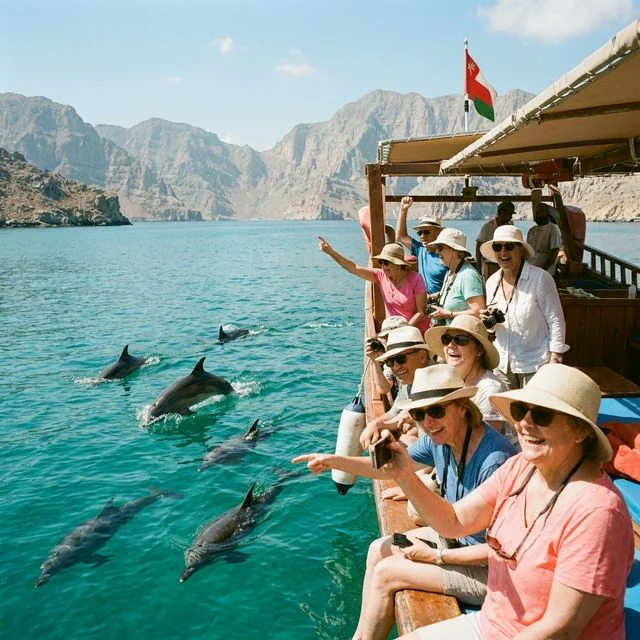
The dolphins here are famously curious and acrobatic. They often actively seek out the tour boats, riding the bow waves generated by the dhows and leaping alongside the vessels to the sheer delight of the passengers.
2. Types of Dolphins You Will See
When embarking on a Khasab dolphin watching adventure, you are primarily looking out for two distinct species:
The Indo-Pacific Humpback Dolphin
These native dolphins prefer shallower, coastal waters. They are slightly slower and more graceful than their oceanic cousins. They are identifiable by their elongated dorsal fin that sits on a distinct fleshy "hump" on their back. As they age, many Indo-Pacific Humpback dolphins develop a unique pinkish-gray mottled coloration.
The Bottlenose Dolphin
These are the classic, highly energetic dolphins most people picture. They are larger, robust, and incredibly playful. Bottlenose dolphins in Musandam are the ones most likely to put on a show—racing the boats, leaping high into the air, and surfing the wake of the dhows. They often travel in pods of anywhere from 5 to 20 individuals.
3. Dhow Cruise vs. Speedboat: Which is Better?
Choosing how you want to see the dolphins is half the planning. Khasab offers two primary modes of transport into the fjords:
The Traditional Dhow Cruise
A Musandam dhow cruise is the quintessential, highly recommended way to experience dolphin watching. Dhows are traditional wooden sailing vessels historically used by Arab merchants. Today, they are outfitted for tourism with plush carpets, comfortable Majlis-style floor cushions, and shaded roofs.
- The Vibe: Relaxed, authentic, and comfortable.
- The Pace: Slow and steady. You glide through the water, allowing you to take in the majestic scenery.
- The Perks: Dhow cruises usually include unlimited fresh fruits (apples, oranges, bananas), dates, Omani tea (Karak), coffee, and cold water.
- Best For: Families, couples, photographers, and anyone who wants a full-day or half-day relaxing sea safari.
The Speedboat Safari
If you are short on time or prefer a high-adrenaline thrill, speedboats are available at the Khasab port.
- The Vibe: Fast, loud, and adventurous.
- The Pace: High-speed. You can cover much more ground than a dhow.
- The Perks: Because they are agile, speedboats can quickly chase down distant pods of dolphins. The action is closer to the waterline.
- Best For: Day-trippers from Dubai on a strict timeline, thrill-seekers.
4. The Best Time for Khasab Dolphin Watching
While dolphins are present 365 days a year, timing your trip correctly can enhance the experience.
Time of Day
Without question, morning tours are the best. Booking a tour that departs around 9:00 AM or 9:30 AM is ideal. During the morning hours, the water inside the fjords is typically as smooth as glass, making spotting the dorsal fins much easier. Furthermore, the dolphins are highly active in the morning as they hunt for breakfast. By the afternoon, the winds often pick up, making the water choppy and the ride slightly bumpier.
Time of Year (Seasonality)
The peak tourist season in Oman runs from October to March. During the winter, the weather is absolute perfection—hovering around a breezy 25°C (77°F). It is comfortable to sit outside on the deck all day.
During the summer (May to September), temperatures can soar above 40°C (104°F). The tours still operate, but the intense heat makes the midday sun punishing. If you visit in the summer, a morning tour or an overnight dhow cruise (where you sleep on the deck under the stars) is highly recommended.
5. What Else Do You See on the Tour?
A Khasab dolphin watching tour is never just about the dolphins. A standard half-day or full-day cruise is a complete marine adventure.
Telegraph Island (Jazirat al Maqlab)
Most dhow cruises stop at Telegraph Island, located deep inside Khor Ash Sham. In 1864, the British built a repeater station on this tiny, barren rock to boost telegraph signals between London and Karachi. Today, it is famous for the stunning coral reefs that surround it. The dhows drop anchor here, providing guests with snorkeling gear to swim among colorful reef fish, parrotfish, and sometimes even harmless reef sharks or sea turtles.
Seebi Island
If you book a full-day cruise, the boat will travel further to the end of the fjord to Seebi Island. This area is incredibly tranquil, visually stunning, and offers even better, less-crowded snorkeling opportunities. Full-day cruises also anchor here for a freshly cooked buffet lunch served right on the boat.
Remote Fishing Villages
As you cruise through the fjords, you will pass small, isolated Bedouin fishing villages like Nadafi, Qanah, and Maqlab. Some of these villages consist of only 10 to 15 stone houses completely cut off from the mainland—they can only be reached by boat.
6. What to Pack for the Trip
To make the most of your Khasab dolphin watching excursion, bring a small day bag packed with the following essentials:
- Original Passport: (Crucial if you are driving across the UAE/Oman border at Tibat to reach Khasab).
- Swimwear: Wear it under your clothes so you can easily jump in when the boat anchors for snorkeling.
- Towel: Most operators do not provide towels.
- Sun Protection: High SPF sunscreen, a wide-brimmed hat, and polarized sunglasses (polarized lenses cut the glare on the water, making it much easier to spot the dolphins!).
- Camera or Action Cam: If you have a GoPro, definitely bring it for the snorkeling stops. For dolphin jumping photos, a DSLR with a fast shutter speed is ideal, though modern smartphones work great for video.
- Light Jacket: If you are traveling in the peak winter months (December/January), the morning sea breeze can be quite chilly before the sun fully rises.
7. How to Book Your Musandam Tour
It is highly recommended to book your Khasab dolphin watching tour in advance, especially if you are traveling during public holidays (like Eid or UAE National Day) or weekends.
- View our Half-Day Dhow Cruises (Perfect for a quick, 3.5-hour morning dive into the fjords).
- View our Full-Day Dhow Cruises (The ultimate 6-hour experience including lunch and two snorkeling stops).
- Contact our Team on WhatsApp (Have questions about visas from Dubai? We can help you navigate the border crossing!).
Khasab offers one of the most reliable, authentic, and breathtaking dolphin encounters in the world. Between the towering fjords, the traditional Omani hospitality, and the playful marine life, it is an adventure that belongs on every Middle Eastern travel itinerary.
Ready to Experience Khasab Dolphin Watching?
Make your Khasab Dolphin Watching memorable with our local expertise. Whether you're interested in Musandam dolphin spotting tours or looking for comprehensive Oman dolphin watching trips, we have the perfect itinerary for you. Let our guides help you explore the incredible beauty of Musandam.
Frequently Asked Questions
How much does Khasab dolphin watching cost?
Is Khasab dolphin watching guaranteed?
What types of boats are used for dolphin watching in Khasab?
Do I need a visa to go dolphin watching in Khasab from Dubai?
How long are the dolphin watching tours?
Ready to Experience Musandam?
Book your adventure today and discover why Musandam is called the "Norway of Arabia".
Zain Musandam
Local Guide & Musandam Expert
"Zain is a local Musandam tour guide from Khasab, Oman, with over 15 years of experience navigating the Musandam fjords. He specializes in dhow cruises, fjord tours, and hidden gems in Musandam, sharing authentic insights into Omani maritime heritage."
Continue Reading
More guides and tips for your Musandam adventure
 Activities
Dolphin Watching in Musandam
Read Article Activities
Hiking in Musandam
Read Article Travel Planning
Photography Guide
Read Article Travel Planning
Mountain Safari Guide
Read Article Travel Planning
Dubai to Musandam Guide
Read Article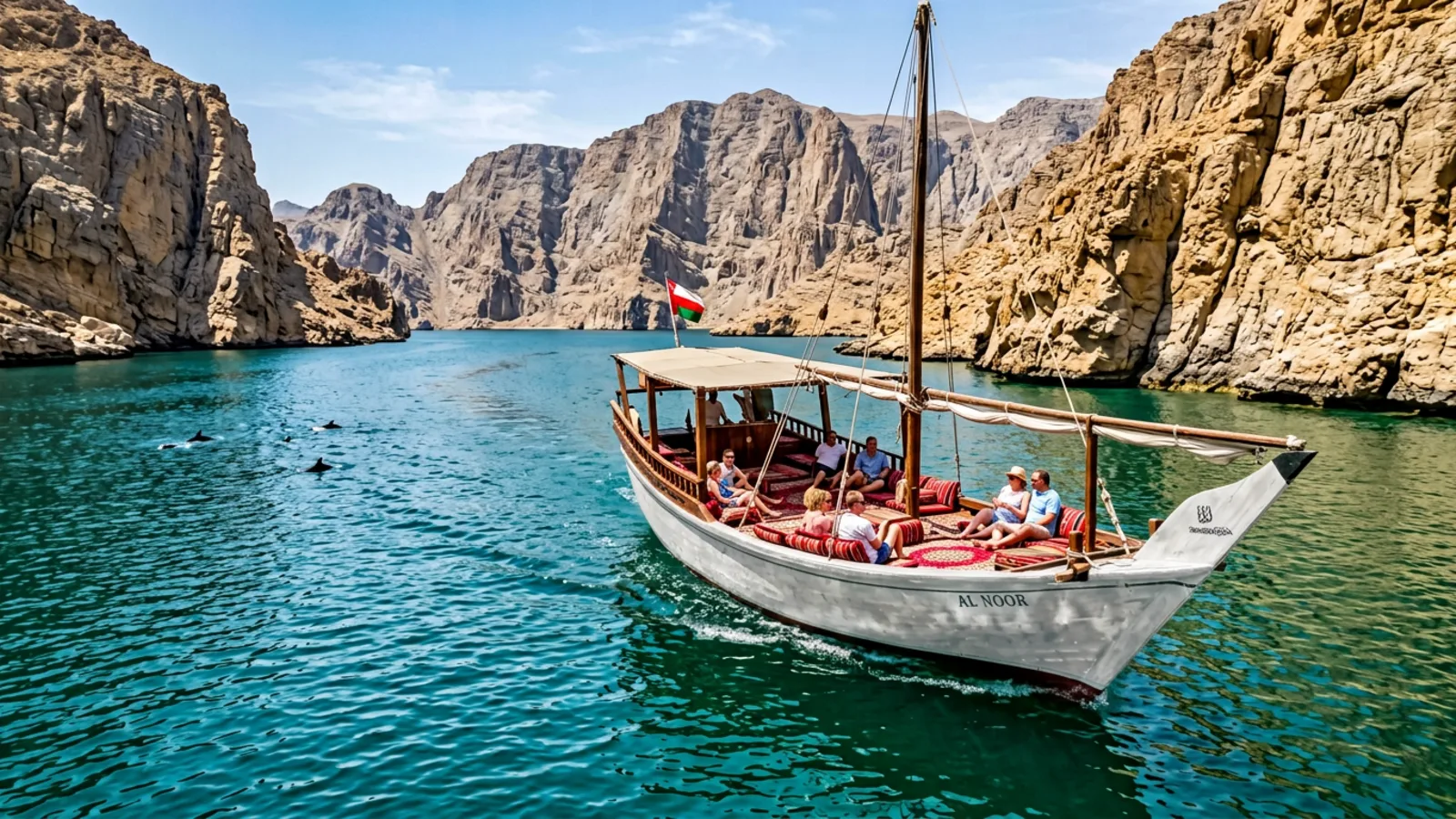 Travel Planning